The Best Flat Iron for Curly Hair: Getting Straight Without the Frizz
curly hair needs an iron that gets the whole section to temperature evenly in one pass — infrared heating, floating titanium plates, and a temperature you can set precisely between 300 and 400°F. The frizz and the reversion most people fight come from uneven heat and repeated passes, not from the curl itself.
Hair Tool Specialist, 15 Years
7 min read
Curly hair is the hardest hair to straighten well, and the easiest to damage doing it. I've watched a lot of people burn through irons — and hair — trying to force a result the tool wasn't built to give. So let me explain what's actually happening when you straighten a curl, and what the iron needs to do about it.
Why is curly hair harder to straighten?
A curl is a strand that isn't round in cross-section and doesn't lie flat against its neighbors. Two things follow.
It fights back. A straightened curl wants to revert the moment it picks up moisture — from the air, from your scalp, from a warm room. The straighter you get it and the more evenly you set it, the longer it holds. A half-set curl reverts in an hour.
It frizzes. When the iron heats the outside of a section and not the inside, the surface strands go straight and the ones underneath don't. You see that as frizz and a "puffy" finish, and the instinct is to go over it again. Now you're heating already-straight hair a second time to reach the strands you missed the first time.
So the tool has one job: heat the entire section evenly, all the way through, in one pass. Everything below is about that.
What kind of heat works on curly hair?
Infrared. This is where infrared heating stops being a marketing word and starts earning its price.
A standard iron heats the plate surface, and the plate heats the hair it touches. On a dense, springy section, the strands touching the plate cook and the strands in the middle stay cooler. An infrared ceramic heater warms the section more evenly from inside the clamp, so the middle of the section reaches temperature at nearly the same time as the outside. In practice that means a smoother pass, less surface scorch, and — this is the part that matters for curly hair — you can often run 20 to 30 degrees cooler for the same result.
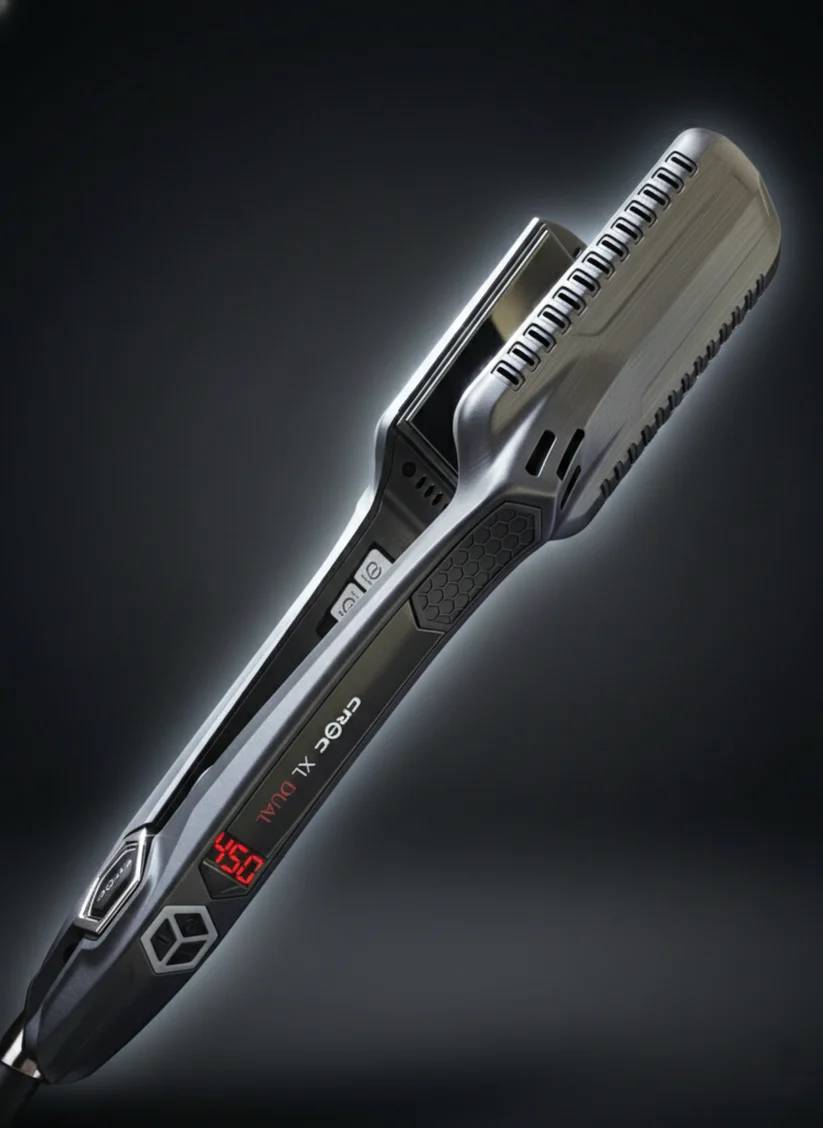
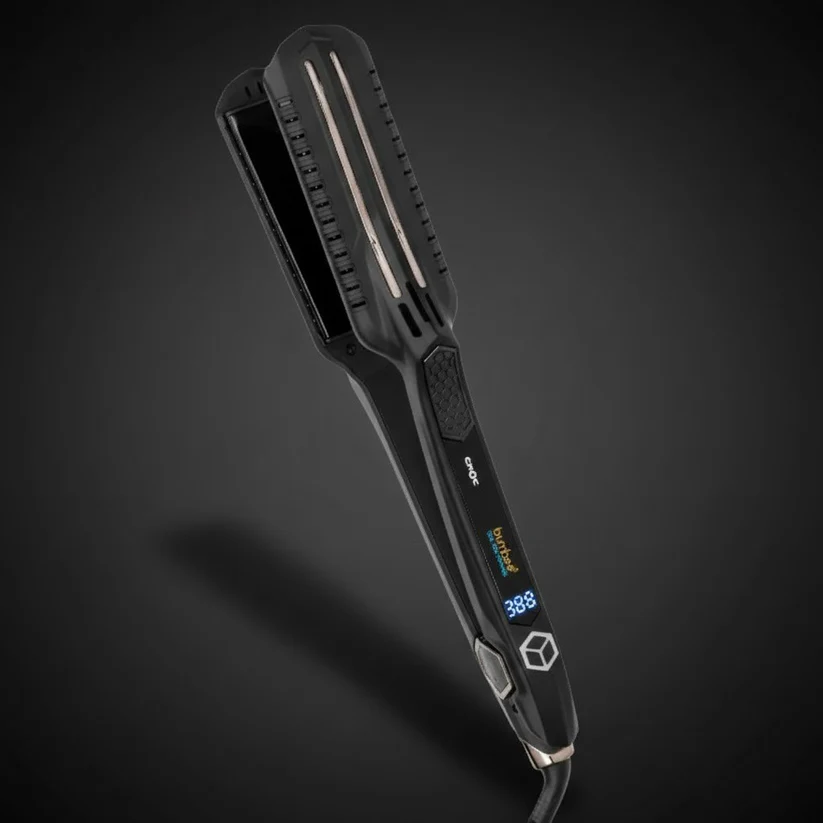
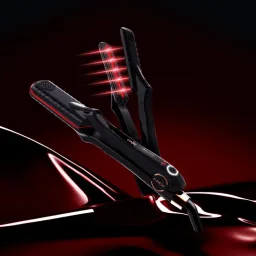
Our Pico Infrared irons go a step further and build the emitters into the plates themselves. The Bumbee Dual Pico uses two of them. What infrared actually does →
What temperature should curly hair be straightened at?
It depends on the curl and the strand, and this is where a precise dial earns its keep.
| Curl pattern | Strand | Start here | Ceiling |
|---|---|---|---|
| 2A–2C wavy | Fine to medium | 300–330°F | 350°F |
| 3A–3B curly | Medium | 340–370°F | 390°F |
| 3C–4A curly to coily | Medium to coarse | 360–390°F | 410°F |
| 4B–4C coily | Coarse | 380–410°F | 430°F |
Two rules. Start at the low end and move up only if a clean single pass doesn't hold. And if your hair is color-treated, chemically relaxed, or fine for its curl type, drop 20 degrees from the chart. Color and chemical processing lower the temperature the hair can take, whatever the curl looks like.
Notice nothing on that chart says 450°F. On an infrared iron with floating titanium plates, most curly hair finishes well under it. If you need 450 to get straight, the problem is usually the pass or the section, not the heat.
What plate width for curly hair?
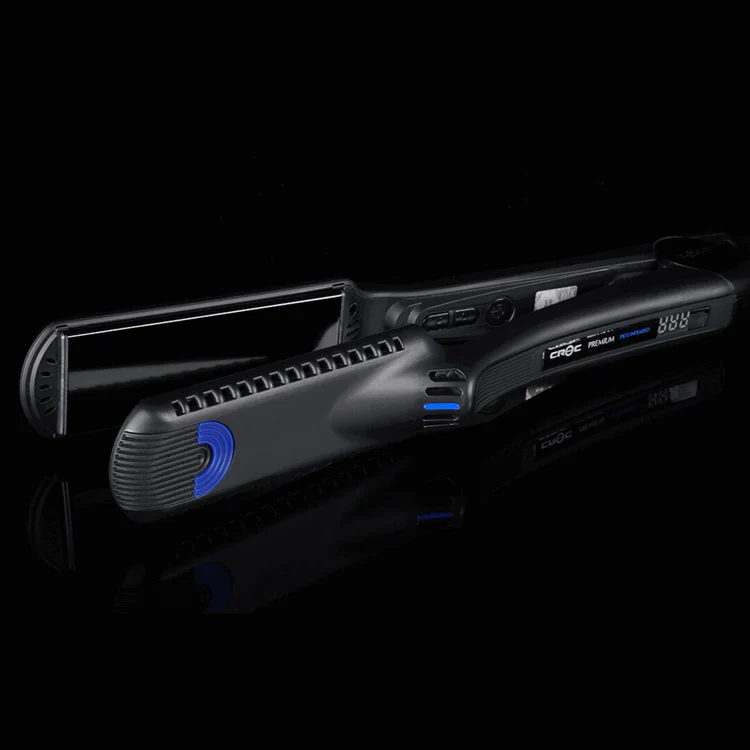
1.5 inches for most curly hair. 1.6 inches if it's also thick or long. 1 inch for short, tight curls at the root and around the face.
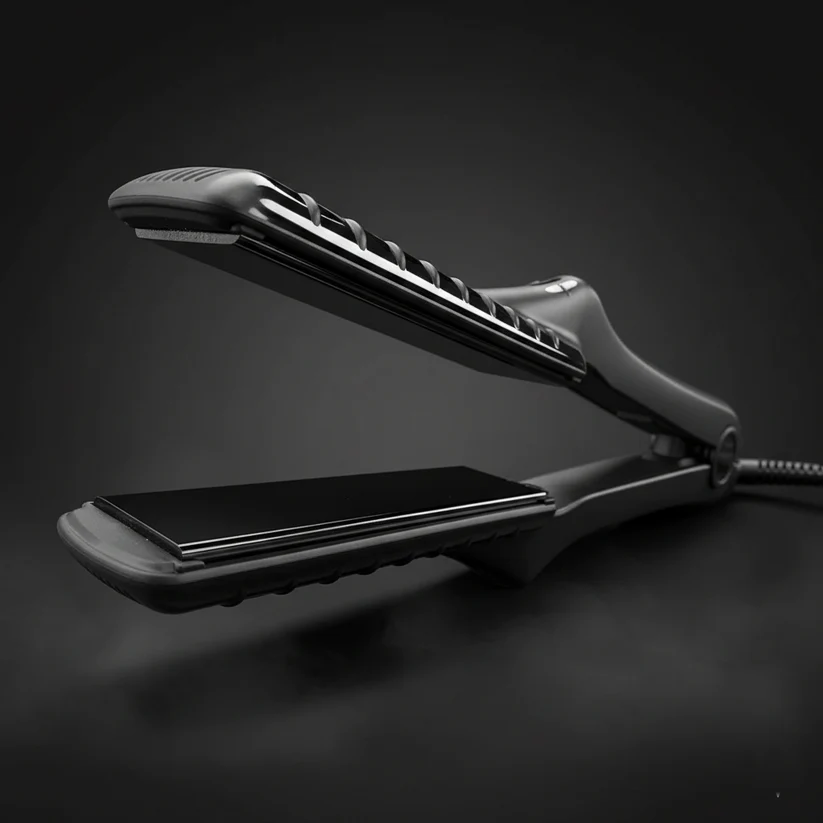
Width matters a little less here than for thick straight hair, because your sections are going to be smaller anyway — you're chasing the curl, not just the volume. What matters more is that the plates are floating: they tilt to follow the section, so an uneven, springy piece of hair gets even pressure across the full width. Fixed plates on curly hair make contact at the high points and miss the rest, and that's a striped, frizzy pass.
If your hair is thick and curly, read the thick-hair guide too — the width logic there applies. Best flat iron for thick hair →
Titanium or ceramic for curly hair?
Titanium, with one caveat.
Titanium transfers heat fast and evenly, which is what a dense curly section needs to get straight in one pass. Ceramic alone is gentler but slower, and slow means more passes — which on curly hair means frizz.
The caveat: because titanium works fast, it punishes a parked iron. Keep it moving. If you tend to hover, our tri-plate irons layer ceramic and tourmaline under the titanium surface for a slightly softer transfer.
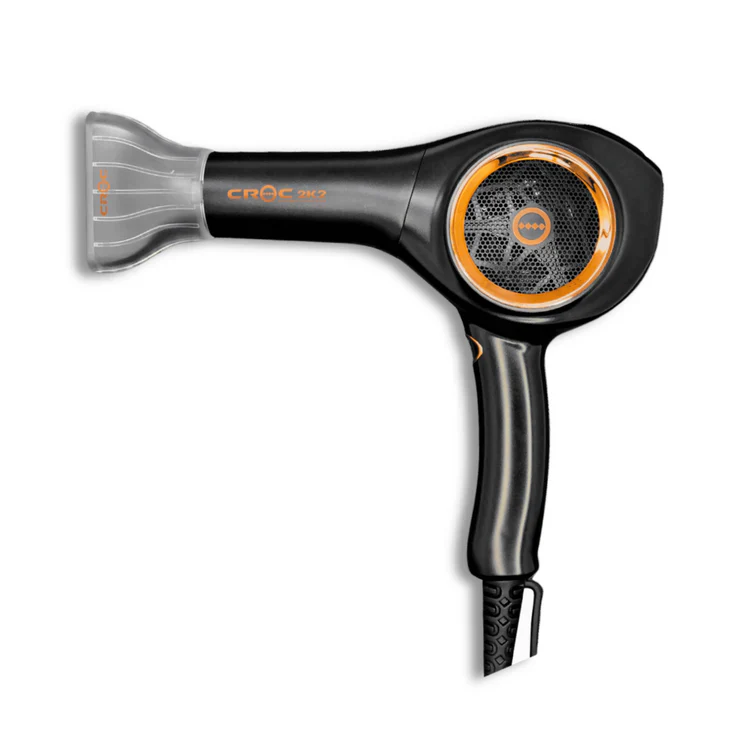
The CROC irons I'd point curly hair at
How to straighten curly hair without frizz
- Start with clean, fully dry hair. Product buildup and damp spots both cause frizz under heat. Blow-dry with tension first if you can — a smooth blow-out is half the work done.
- Heat protectant, combed through every section. Not sprayed over the top.
- Section small. With curly hair, an inch to an inch and a half wide, and thin enough to see light through.
- Set the temperature from the chart — low end first.
- Comb-chase. Run a fine-tooth comb through the section just ahead of the plates, in the same pass. It aligns the strands so the plates heat them evenly. This one technique fixes more frizz than any temperature change.
- Clamp at the root, glide steady and slow, no stopping. One pass.
- Don't touch it while it's warm. The set happens as it cools. Let a section cool before you move on around it.
- Finish with a light serum or oil on the ends only — for shine and a barrier against humidity.
Frequently asked questions
Henry Rodriguez has designed and sold professional hair tools since 2010. CROC irons are tested before they ship and covered by a 5-year limited warranty. Register yours →
Why does my hair frizz when I straighten it?
Uneven heat. The strands touching the plate straighten and the ones in the middle of the section don't, so you get a puffy finish and go over it again. Smaller sections, comb-chasing, and an infrared iron with floating plates fix it.
Why does my straightened hair revert so fast?
It wasn't fully set. Either the section didn't reach temperature all the way through, or it was touched or exposed to humidity while still warm. One even pass, then let it cool untouched.
Is infrared worth it for curly hair?
More than for any other hair type. Even heat through the section is exactly what curly hair needs, and it lets you run cooler for the same result.
What temperature is best for 4C hair?
Start at 380°F on an infrared iron and go up only if a clean pass doesn't hold. Most 4C hair finishes between 380 and 410°F. Drop 20 degrees if it's color-treated or relaxed.
Should I use a 1-inch or 1.5-inch iron on curly hair?
1.5" for most heads. 1" for short hair, tight curls at the root, and edges. Plenty of people with curly hair own both.