Floating Plates on a Flat Iron: Why They Wobble, and Why You Want That
Hair Tool Specialist, 15 Years
6 min read
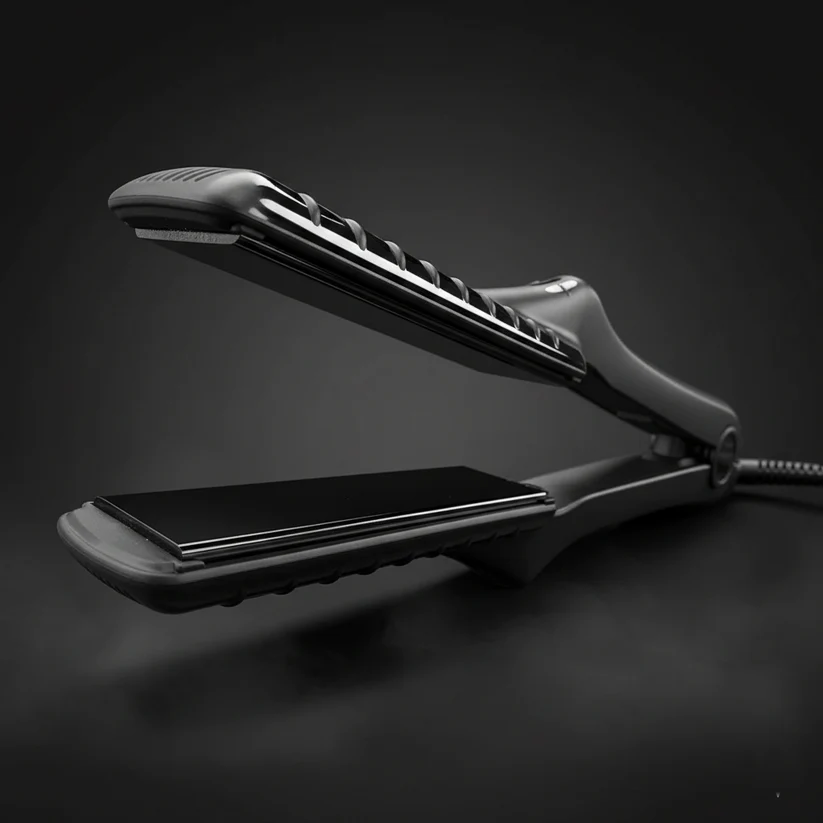
Floating plates are flat iron plates mounted on small springs so they tilt a few degrees instead of sitting rigid. When you clamp a section, the plates level themselves to the hair, so pressure is even from edge to edge. That's what gives you a clean pass without snagging, hot spots, or a crease at the plate edge.
I get a version of this message a few times a month: "The plates on my iron feel loose. Is it defective?" Almost every time, the answer is no. What they're feeling is the plate doing its job. This post is the explanation I wish came printed on the box.
Why do the plates on my flat iron wobble?
Press the corner of a plate with your thumb on a good iron and it will give a little, then spring back. Press the other corner and it tilts the other way. That movement is designed in. Under each plate there's a small spring or a cushioned mount, and the plate sits on it rather than being bolted flat to the housing.
A fixed plate can only be perfectly flat against the other plate if the housing, the hinge and both plates are machined perfectly and stay that way through thousands of heat cycles. In practice they don't. Fixed-plate irons develop a tight edge and a loose edge. You feel it as a snag on one side, or a section that comes out straight at the roots and bent at the ends.
A floating plate doesn't need perfection. It finds the hair on its own.
What does a floating plate actually do for the hair?
Three things, and they all come down to even pressure.
One pass instead of three. When the whole plate is in contact, the whole section gets the same heat at the same time. You're not going back over the parts the tight edge missed. Fewer passes is less heat exposure, which is the entire game for anyone who straightens more than once a week.
No crease line. The mark some people get at the plate edge — a faint bend across the hair — comes from a rigid edge biting into the section. A plate that tilts spreads that pressure out. The edge stops being an edge.
Consistent glide. When you pull the iron down a section, the section changes thickness — it's fuller near the root and thins toward the ends. Floating plates adjust as you go. Rigid plates make you adjust your grip instead, and most people don't.
If you've read the thick hair post, this is the second half of the "fewer passes" argument. Plate width gets more hair per pass. Floating plates make sure the pass actually works.
Is it the same thing as a loose or broken plate?
No, and here's how to tell the difference in ten seconds.
Cold iron, unplugged. Press one corner of a plate. It should give a small amount — a couple of millimetres at most — and return on its own when you let go. Press the opposite corner; same thing. That's floating.
What a real fault looks like: the plate rocks and stays rocked. It rattles when you shake the closed iron. It sits visibly higher on one side with nothing pressing it. Or there's a gap between the plate and the housing you can see light through. Any of those, and it's a warranty conversation, not a feature. Register your tool and email us the photo.
Fifteen years in, the number of true loose-plate faults I've seen on a CROC iron I can count on one hand. The number of "loose plate" emails that were floating plates working correctly, I can't.
Do all flat irons have floating plates?
No. It's a manufacturing cost — a spring mount and the tolerances to make it work are more than a plate screwed down flat — so drugstore irons mostly don't have them, and some professional irons skip them on the narrower models where the plate is small enough that flex matters less.
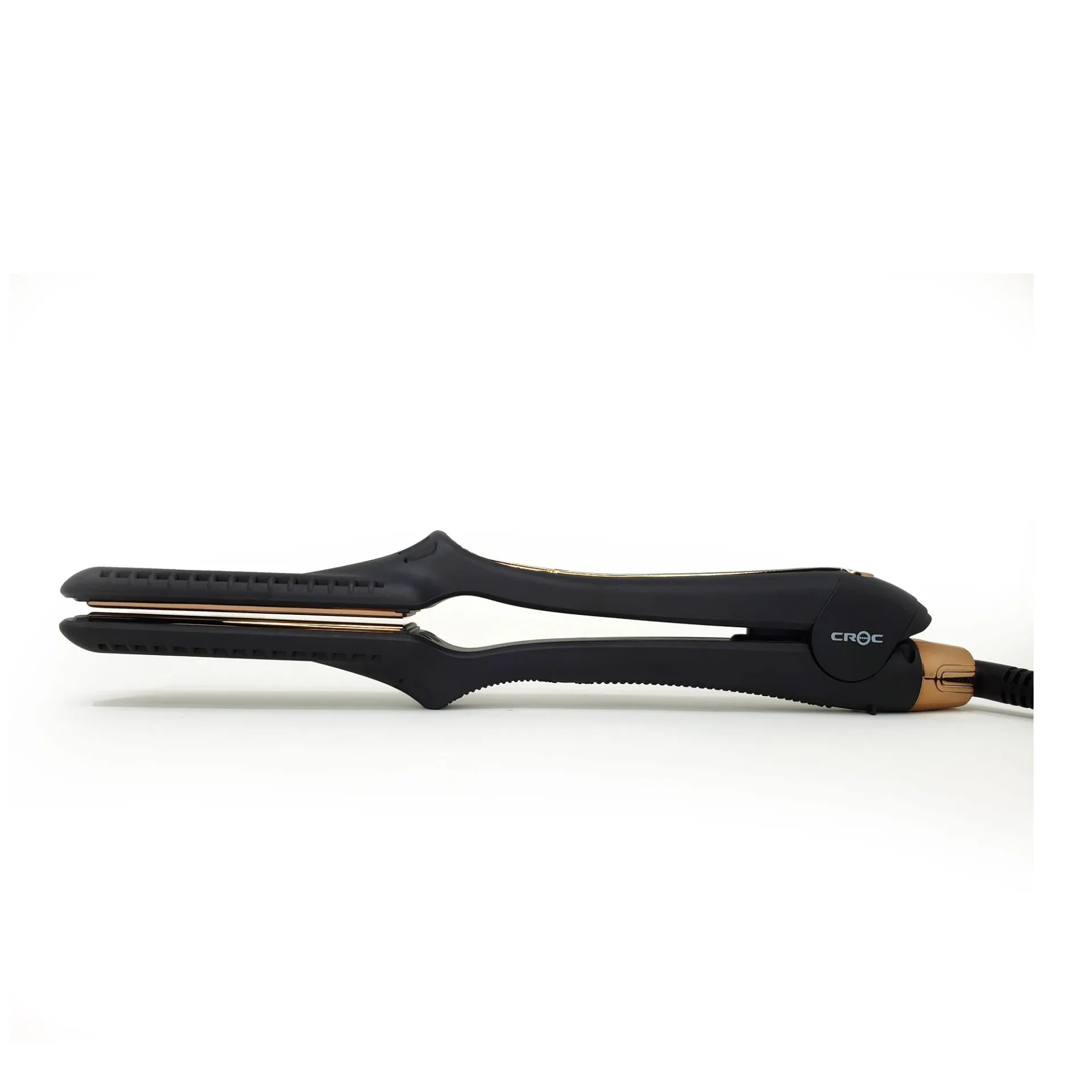
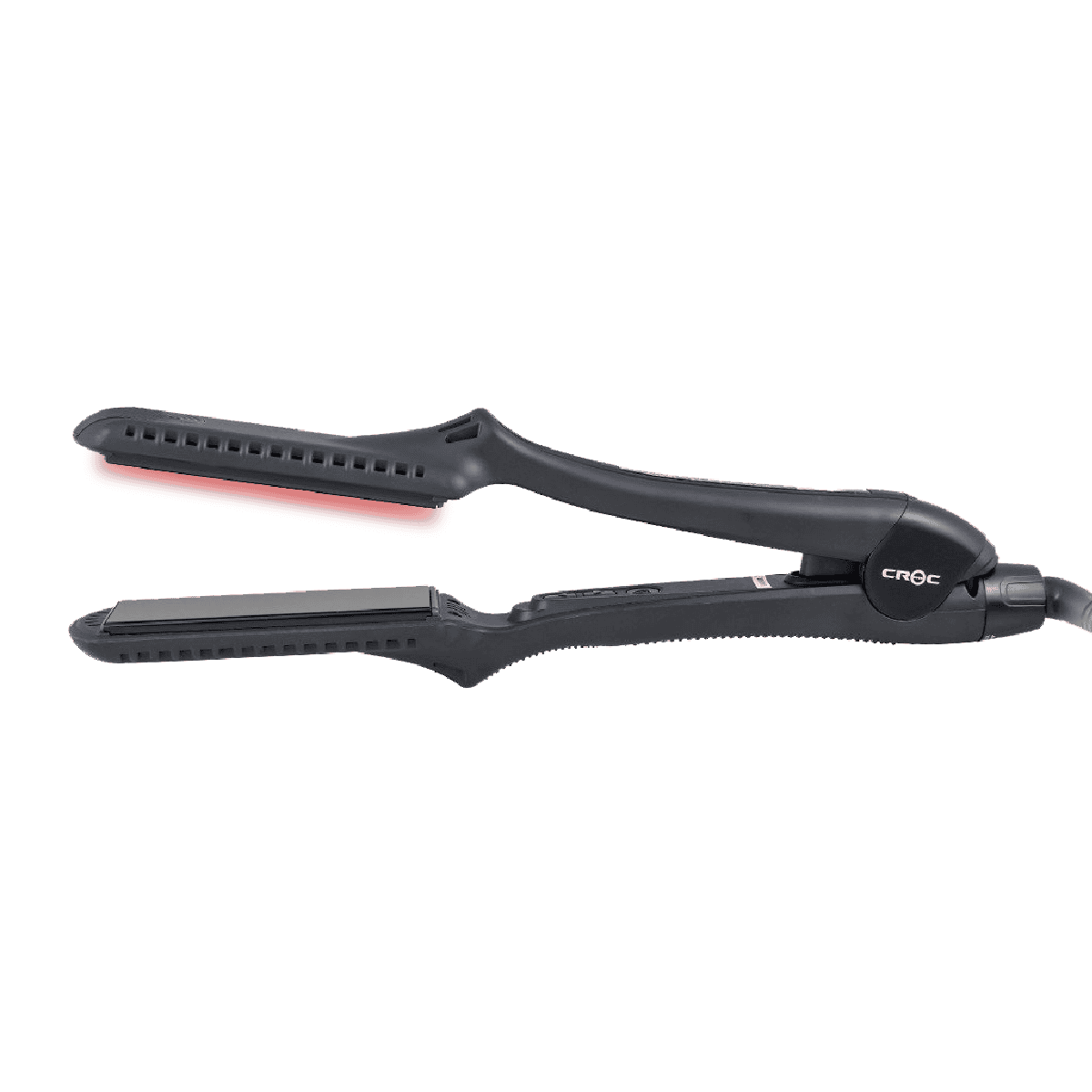
In the CROC line, these are the irons with floating plates:
- Premium Infrared 1.5" — nano black titanium plates, single infrared emitter.
- Rose Gold Titanium 1.25" — the narrowest floating-plate iron we make. Good for medium-length and layered cuts.
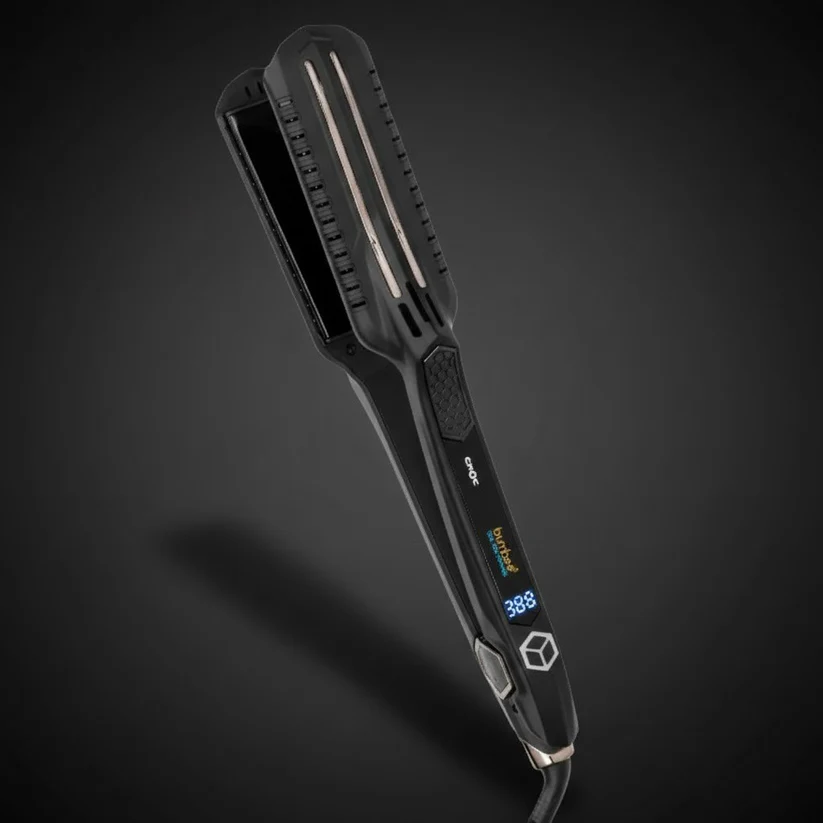
- Bumbee Dual Pico Infrared 1.6" — dual voltage, two emitters, floating black titanium.
The others in the range are still good irons. But if you've had the crease-line or snag problem with a previous tool, floating plates are the spec to look for first, before wattage or plate material.
Does the plate material change how floating plates feel?
A little. All three irons above use a titanium plate, and titanium is the smoothest of the three common plate materials — ceramic, tourmaline-ceramic, titanium — so the glide is already good. Floating plates on titanium is the combination that produces the "it just slid through" feeling people describe after their first pass with a good iron.
Titanium also holds temperature evenly across the plate, which matters here: the whole point of the plate levelling itself is that all of it is at the same heat. A plate with a hot centre and cooler edges wastes the mechanism.
How do I get the most out of floating plates?
Three habits. None of them are hard.
Don't clamp hard. People squeeze a flat iron like pliers. With floating plates you don't need to — the plates are already finding the hair. Light, closed pressure. Let the tool do the work.
One steady pull. Start at the root, pull down in one motion, don't stop and restart mid-section. Stopping is what leaves a mark. The plates level themselves as the section thins, but only if you keep moving.
Right width for the section. A 1.5" iron wants a section roughly as wide as the plate. Overstuff it and even a floating plate can't reach the middle of the section. Sectioning is in the curly hair post if you want the full method.
FAQ
My flat iron plates move when I press them. Is that normal?
Yes, on an iron with floating plates. A few millimetres of give at the corner that springs back on its own is the design. A plate that stays tilted, rattles, or shows a visible gap is a fault — contact us.
Are floating plates better than fixed plates?
For most hair, yes. They keep pressure even across the plate, which means fewer passes, no crease line, and a smoother glide. Fixed plates can work well when they're perfectly machined, but they don't stay that way.
Which CROC flat irons have floating plates?
Premium Infrared 1.5", Rose Gold Titanium 1.25", and Bumbee Dual Pico Infrared 1.6".
Do floating plates wear out?
The spring mounts are rated well past the life of the heating element. In fifteen years I haven't replaced a plate for losing its float. If it ever does, it's covered under the CROC warranty — register within 30 days of purchase.
Do I need to press harder with floating plates?
No — the opposite. Light, closed pressure is all they need. Squeezing hard defeats the point and puts the crease line back.