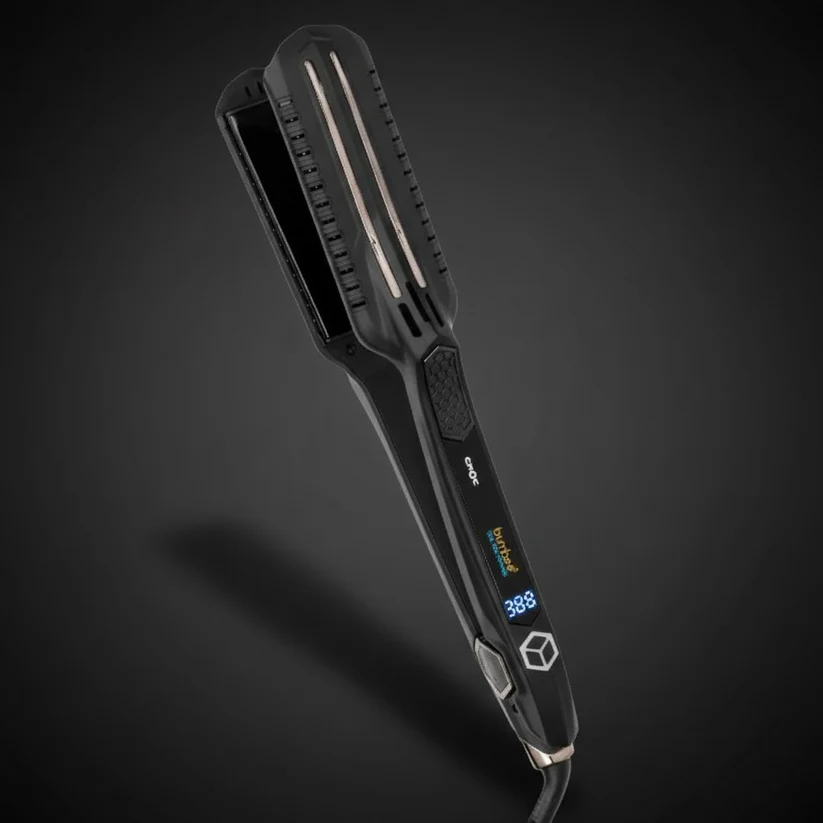
Infrared vs Non-Infrared Flat Irons: The Honest Version
Hair Tool Specialist, 15 Years
7 min read
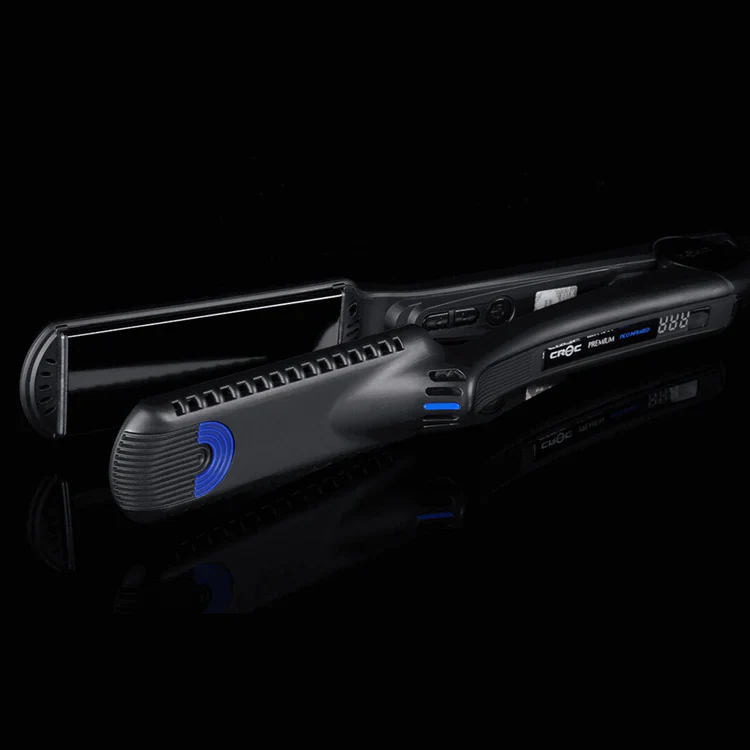
A conventional flat iron heats hair from the outside in — hot plate, surface first, heat moves inward. An infrared iron adds an emitter that heats the inside of the strand at the same time, so the hair reaches temperature more evenly and needs fewer passes. Under a microscope, hair ironed on a CROC infrared iron showed a more sealed, aligned cuticle. It's a real difference — and plenty of people don't need it.
We make both. Nine of our eighteen tools are infrared, nine aren't, and I sell a lot of the non-infrared ones on purpose. So this isn't a post that ends with "buy the expensive one." It's the explanation I give at the counter, including the part where I tell someone to keep their money.
What does a regular flat iron actually do to hair?
Heat and pressure. The plates are hot — say 380°F — the hair touches them, and heat conducts into the strand from the surface. The outer layer, the cuticle, gets to temperature first. The inside, the cortex, gets there later, as heat works its way in.
That lag is the whole problem. To get the cortex hot enough to reshape the hair (which is what straightening is), the cuticle has to sit at full heat for longer than it would like. Do that once, fine. Do it daily, or do three passes because the first didn't take, and the cuticle takes the damage — lifted scales, roughness, dullness. That's why heat damage is a surface problem before it's anything else.
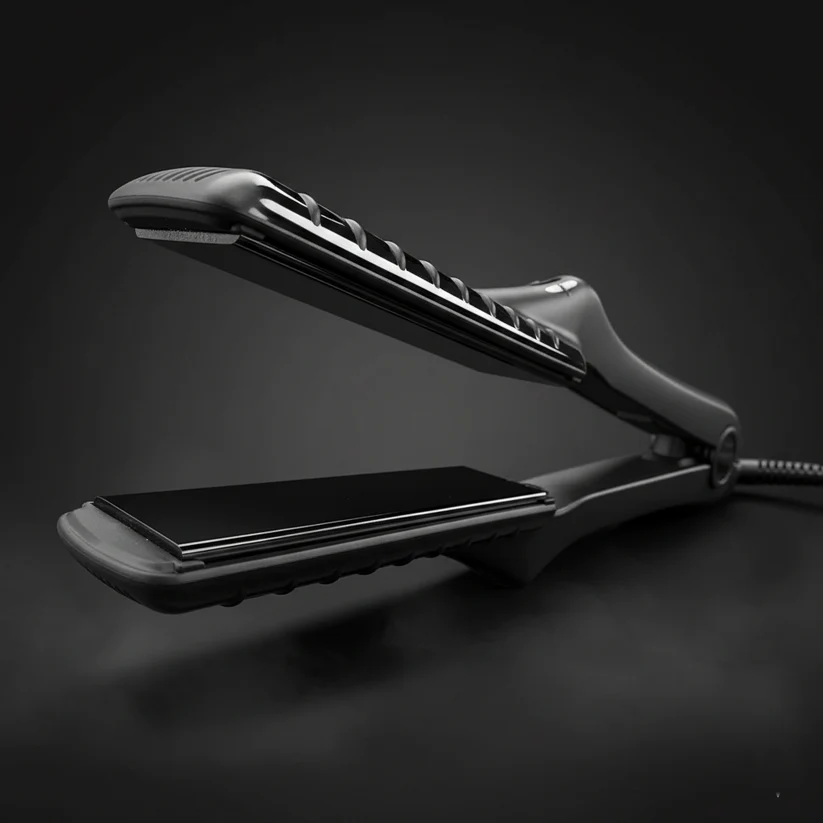
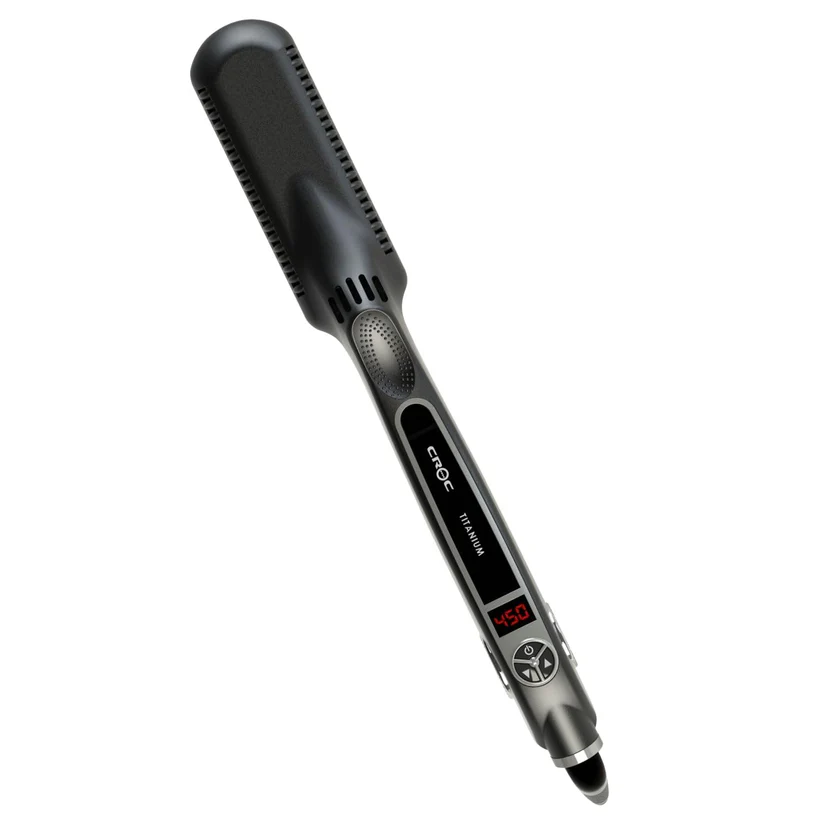
A good conventional iron limits this with smooth, evenly-heated titanium plates and floating plates that don't need a second pass. Our Classic Silver Titanium 1.5" is exactly that, and it's the right iron for a lot of people. More on who in a minute.
What does infrared change?
An infrared iron has the same plates plus an emitter — a strip between them that gives off infrared energy. Infrared is heat you can't see, the same thing you feel from a fire when you're not touching it. It penetrates rather than conducts. On hair, that means the cortex starts heating at the same time as the cuticle, instead of waiting for the heat to arrive from the surface.
Two practical consequences:
The inside and outside reach temperature together. So the strand reshapes on the first pass more often, and the cuticle doesn't have to sit at heat waiting for the inside to catch up.
Less friction. A strand that's at uniform temperature moves through the plates more easily than one with a hot skin and a cool core. Less drag on the cuticle is less damage per pass.
The honest framing: infrared doesn't make the iron hotter, and it isn't a coating or a plate material. It's a second heat source that changes where heat goes. The full technical page is at crocofficial.com/infrared.
What did the lab study actually show?
I'd rather tell you exactly what was done than say "clinically proven" and hope you don't ask.
We sent a human hair sample to a lab. They split it. One half was analysed untreated. The other was ironed on a CROC Professional Infrared iron at 380°F with the infrared function on, four passes. Both halves went under a scanning electron microscope — a JEOL JSM-6010PLUS — with elemental analysis alongside.
What the images showed: the untreated cuticle was irregular, with slight lifting and material embedded between the scales. The infrared-ironed cuticle was better sealed and better aligned, with a visibly smoother surface. A sealed, aligned cuticle reflects light evenly. That's what shine is, physically.
What the study did not do, and I want to say this plainly: it didn't iron a third sample on a non-infrared iron at the same temperature for a side-by-side. It compared infrared-ironed hair to untreated hair and found the ironed hair had a smoother cuticle — which tells you the infrared iron at 380°F and four passes didn't rough the hair up, and did the opposite. It's a strong result. It isn't a head-to-head, and I won't pretend it is.
What I have that the lab doesn't is fifteen years of watching the same clients' hair over time. Hair styled on infrared, at the same temperature, tends to feel softer and look healthier months in. That's observation, not microscopy. You can weigh it accordingly.
Who actually benefits from infrared?
This is the part that matters if you're deciding what to buy.
Buy infrared if: you straighten more than twice a week; your hair is colour-treated, chemically treated, or already showing heat damage; your hair is coarse or curly and normally needs multiple passes; you've had a keratin treatment and want to maintain it (the keratin post covers why). Fewer passes and even heat pay off fastest on hair that's getting a lot of heat or is already fragile.
Skip infrared if: you straighten once a week or less; your hair is healthy, fine to medium, and straightens in one pass already; you're buying a first professional iron and the budget is the budget. A conventional titanium iron with floating plates — the Classic Silver Titanium — will do everything you need, and the money is better spent on a good heat protectant.
The one wrong answer: buying a cheap non-infrared iron with rigid plates and turning it to max. That's the combination that does damage, and it has nothing to do with infrared either way.
Infrared, Dual Infrared, Pico Infrared — what's the difference?
You'll see three versions across the range, and the names mean something.
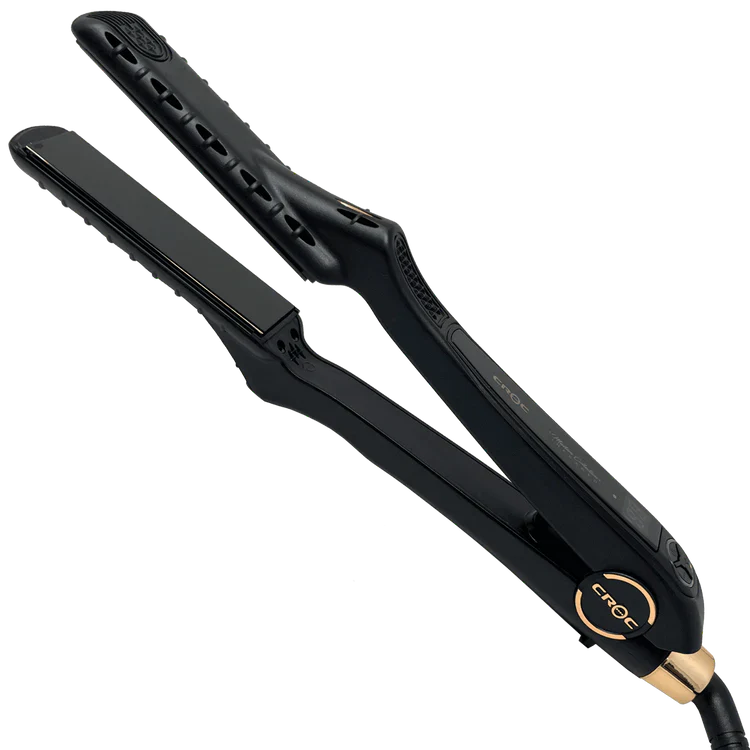
Infrared — one emitter. The Masters Infrared 1.5" and the Classic Infrared Tourmaline Ceramic 1.5".
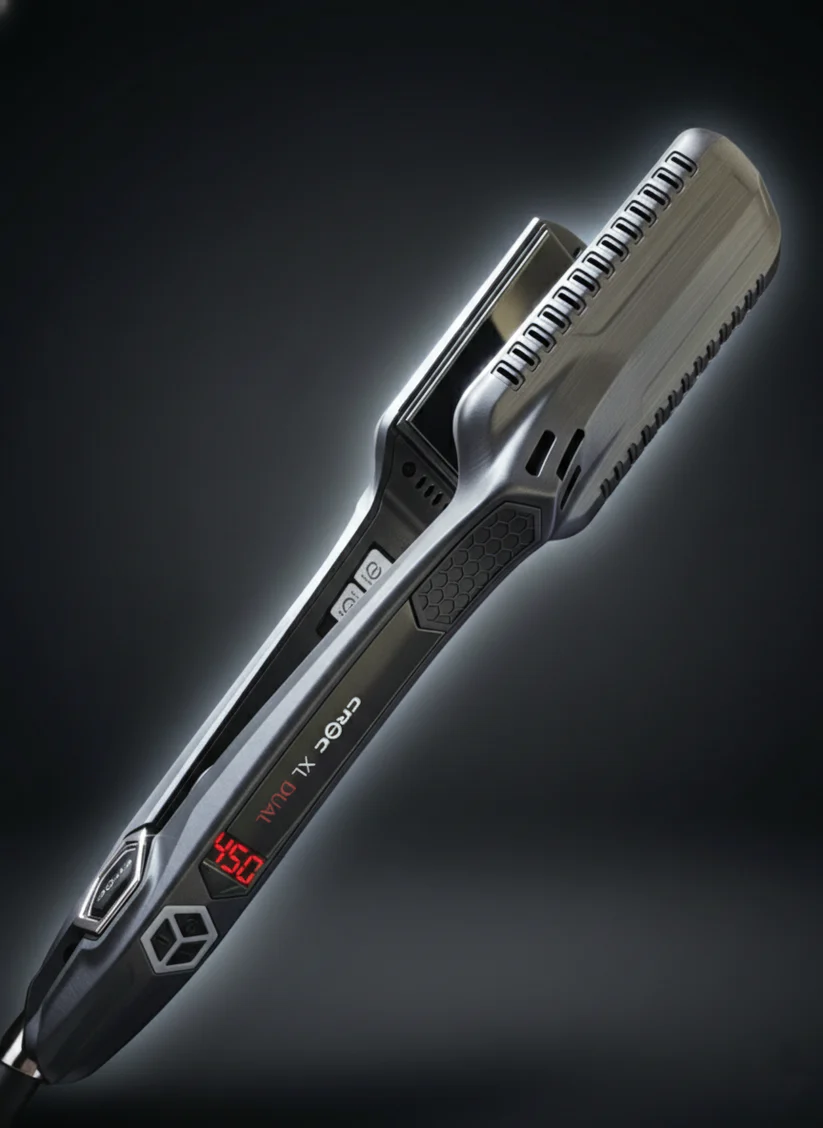
Dual Infrared — two emitters, one per plate. Heat reaches the strand from both sides. It's on the XL Dual Infrared 1.75", where the plate is wide enough that one emitter would leave the far edge conventional.
Pico Infrared — [HENRY: one line on what Pico means — newer emitter generation? finer/far-infrared wavelength? Say it in your words and I'll set it.] It's on the Premium Pico Infrared 1.5" and the Bumbee line.
If the word "Infrared" isn't in the product name, the iron heats conventionally. We don't hide it in the fine print.
How do I get the most out of an infrared iron?
Three things, and the first one surprises people.
Turn the temperature down. Infrared doesn't need more heat; it needs less. Start 20°F lower than you'd set a conventional iron and see if it takes. It usually does.
Fewer passes. The study used four. Most hair needs one or two on an infrared iron. Every pass past the one that worked is damage with no upside.
Keep the strip clean. Product residue builds up on the infrared emitter between the plates and blocks it — at which point you've paid for infrared and you're using a conventional iron. Cotton swab, a little rubbing alcohol, when the iron is cold. Once a month if you use product daily.
FAQ
Is an infrared flat iron better than a regular one?
For hair that's fragile, treated, coarse, or straightened often — yes, because it needs fewer passes and heats the strand evenly. For healthy hair styled once a week, a good conventional titanium iron does the job.
Does infrared make the flat iron hotter?
No. Same 280–450°F range. Infrared changes where the heat goes — into the strand as well as onto it — not how much there is.
What did CROC's lab study prove?
Under a scanning electron microscope, hair ironed four times at 380°F on a CROC infrared iron showed a better-sealed, better-aligned cuticle than untreated hair. It did not include a non-infrared iron for comparison.
Which CROC irons are infrared?
Any model with "Infrared" in the name — nine of eighteen tools, across the Masters, Bumbee, Premium, XL and Classic lines. The full list is on the infrared page.
Does infrared help with frizz?
A sealed cuticle is a flatter, less porous surface, which holds up better in humidity. Combined with the negative ion generator on the same irons, yes — it's the reason the infrared models are the ones stylists reach for on frizz-prone hair.