Best Flat Iron for Thick Hair: Plate Width, Heat, and What Actually Matters
thick hair needs a wider plate (1.5" to 1.75"), a heater that holds its temperature under load, and titanium or a titanium-ceramic mix so the heat transfers fast. Get those three right and you'll straighten in one pass instead of three — which is what actually protects the hair.
Hair Tool Specialist, 15 Years
7 min read
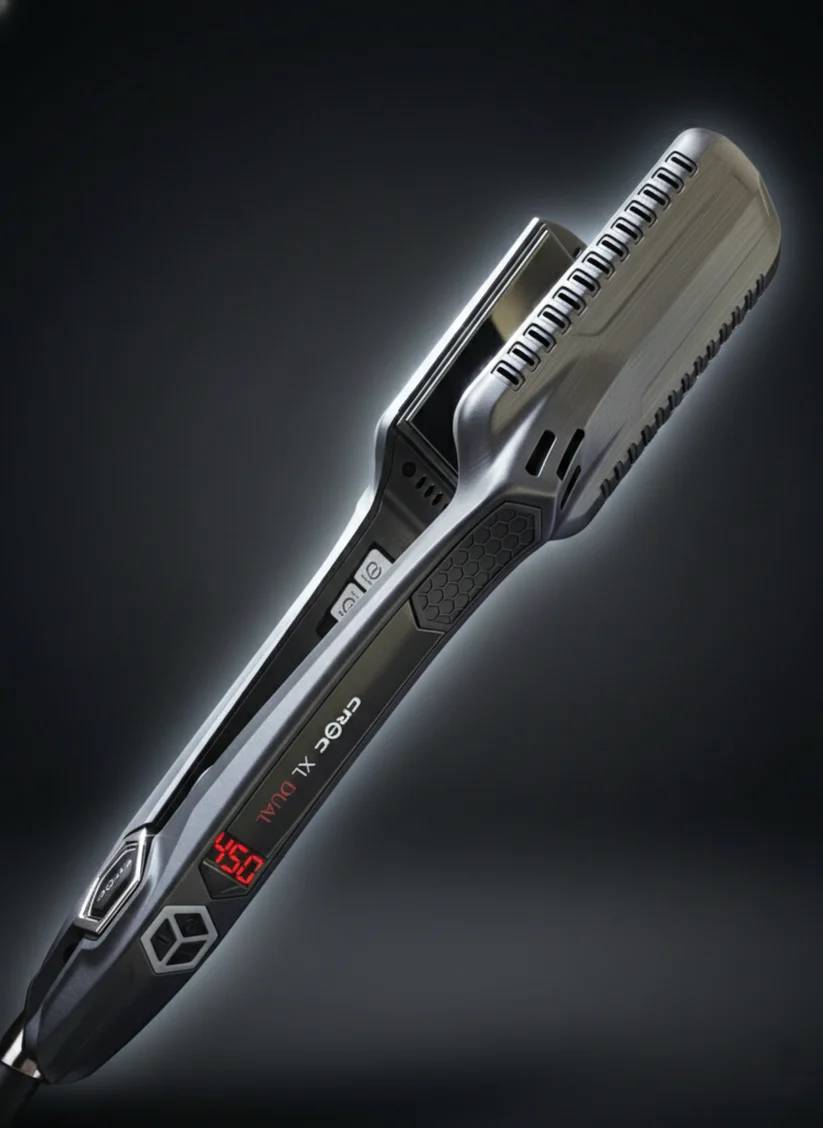
I've been building and selling flat irons since 2010. In that time the single most common complaint I hear from people with thick hair is the same one: "I have to go over each section four or five times and it still doesn't hold." That's not a technique problem. It's a tool problem, and it comes down to three things.
Why does thick hair need a different flat iron?
Thick hair means more of it — more strands per section, and often a coarser strand too. Two things happen when you press a lot of hair between two plates.
First, the section pulls heat out of the plates. A small heater with a thin plate drops 30 or 40 degrees the moment you clamp down, then has to recover before the next section. You feel that as "the iron isn't hot enough," so you turn it up. Now you're running 450°F on a tool that only delivers it for the first second of each pass.
Second, a narrow plate forces you to take small sections. Small sections on a full head of thick hair means a lot of passes — and every pass is heat exposure. The damage people blame on "high heat" is more often a lot of medium heat, repeated.
So the goal is simple: fewer passes, at a steady temperature, on a plate that can actually hold the section.
What plate width is best for thick hair?
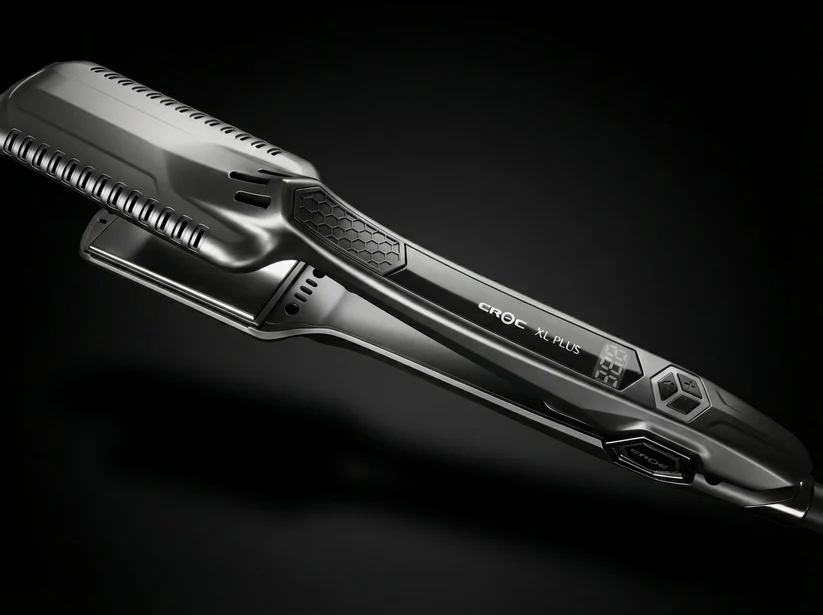
1.5 inches is the floor. 1.75 inches is the sweet spot for long, thick hair.
| Plate width | Best for | Sections | Passes on thick hair |
|---|---|---|---|
| 1" | Short hair, bangs, curling with the iron, touch-ups | Small | Many |
| 1.25" | Fine to medium hair, shoulder length | Medium | Several |
| 1.5" | Medium to thick hair, most lengths | Medium–large | 1–2 |
| 1.75" | Thick, long, or very dense hair | Large | 1 |
The trade-off with 1.75" is agility. It's not the iron for a pixie cut or for tight curls at the root. But if you've got a lot of hair past your shoulders, the wider plate lets you take a two-inch section and finish it in one pass. That saves you 20 minutes and a lot of heat.
If your hair is thick but short, or you want to curl with the same iron, stay at 1.5".
What temperature should thick hair be straightened at?
Lower than you think. 380–410°F does the job on thick, healthy hair when the iron can hold that temperature. 450°F is for very coarse, very resistant hair — and only on an iron that recovers fast enough to actually deliver it.
The number on the display is the target. What matters is what the plate does when a thick section hits it. That's why heater wattage and plate material matter more than the top number on the box:
- Heater power. Our XL irons run double ceramic heaters at 65–75W. That's what keeps the plate at temperature through a full section instead of dipping and recovering.
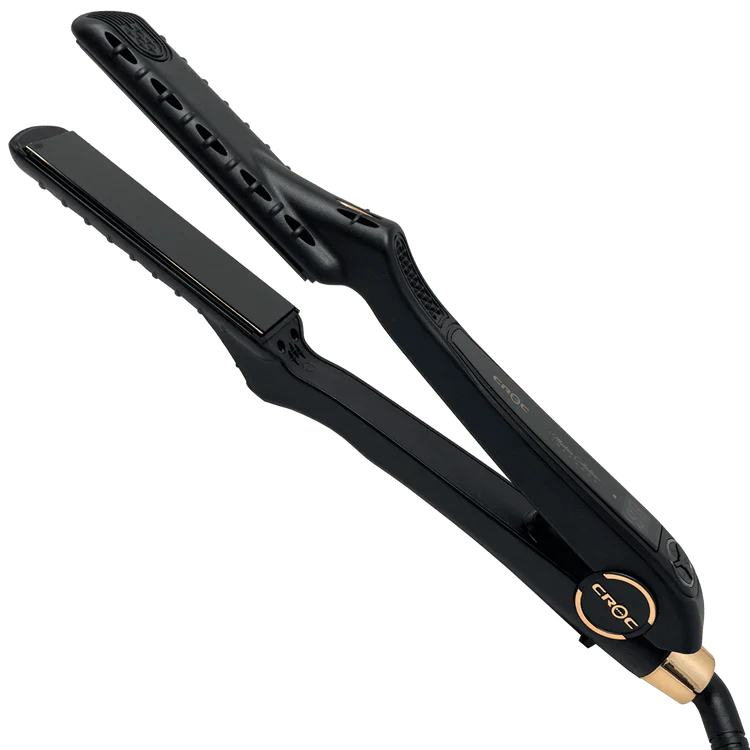
- Plate material. Titanium conducts heat faster and more evenly than ceramic alone. It gets to temperature quickly, and it transfers heat into the section quickly — one firm pass, done. Our black titanium plates are titanium with a black coating; our tri-plates layer ceramic and tourmaline under a titanium surface for a slightly softer heat.
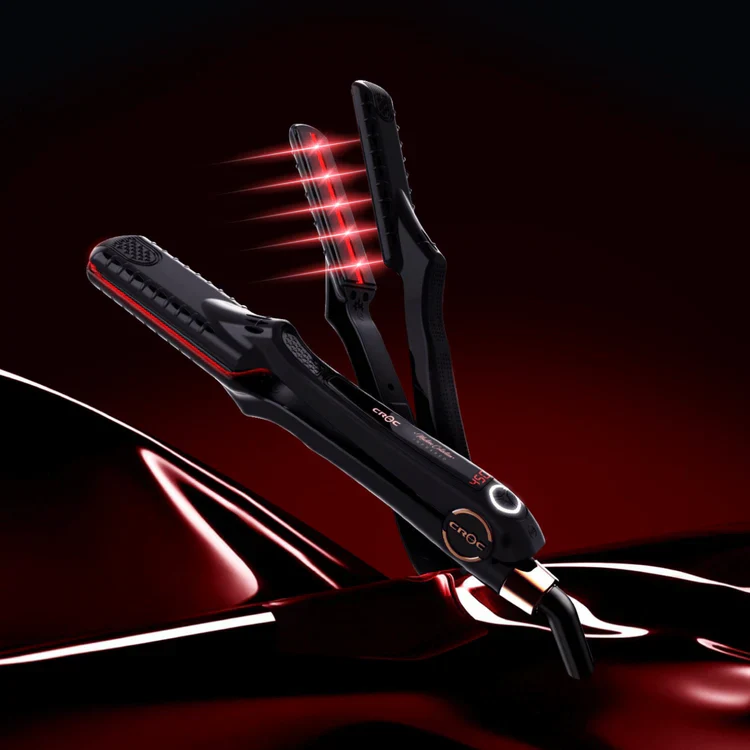
- Infrared heaters. Instead of just heating the plate surface, an infrared ceramic heater warms the section more evenly from the inside of the clamp. In practice: less surface scorch, smoother result, and you can often run 20 degrees cooler for the same finish. What infrared actually does →
If you're going over the same section twice at 450°F, turn it down to 400°F and take a slightly smaller section. It will finish faster and look better.
Titanium vs ceramic for thick hair — which one?
Titanium, or a titanium-topped tri-plate.
Pure ceramic plates are gentle and even, and they're right for fine or damaged hair. But they're slow to transfer heat into a dense section, which pushes you into more passes. Titanium moves heat fast, which is exactly what a thick section needs. The coarser your hair, the more titanium earns its keep.
The one caveat: because titanium works fast, it punishes a lazy pass. Clamp, glide at a steady speed, release. Don't park the iron.
Floating plates: why they matter more on thick hair
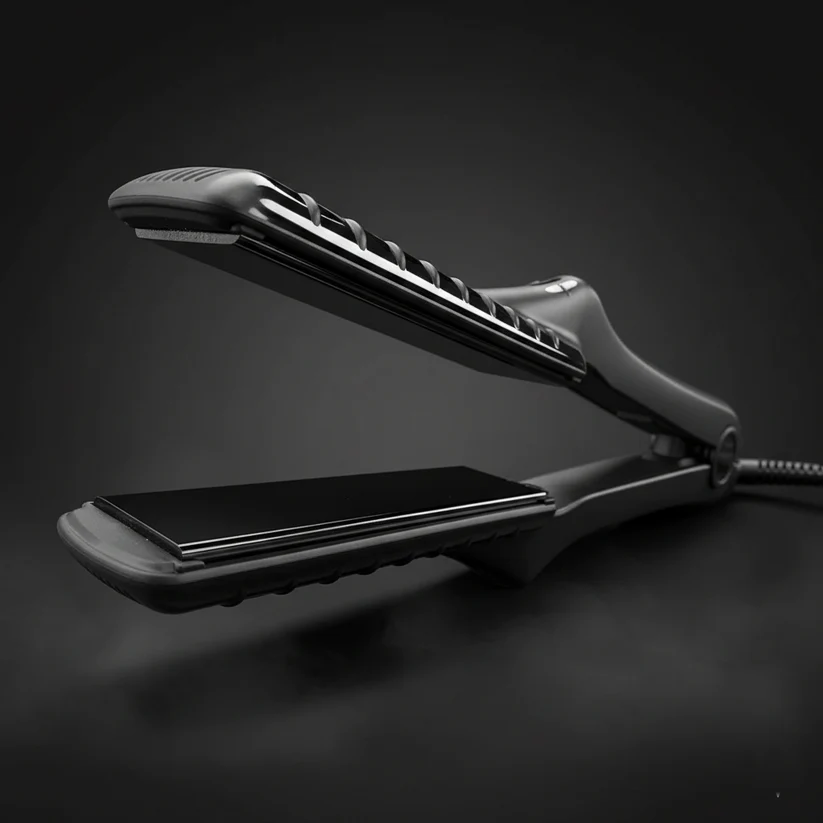
Look at the plates on one of our floating-plate irons and push one with your finger — it moves. That's a floating plate, and it's deliberate. When you clamp a thick, uneven section, a fixed plate makes contact at the high points and misses the rest. A floating plate tilts to follow the section, so the whole width gets even pressure and even heat. On fine hair you'd barely notice. On thick hair it's the difference between a smooth pass and a striped one.
(If you've ever thought your plates were loose or damaged because they move side to side — they're not. That's the design.)
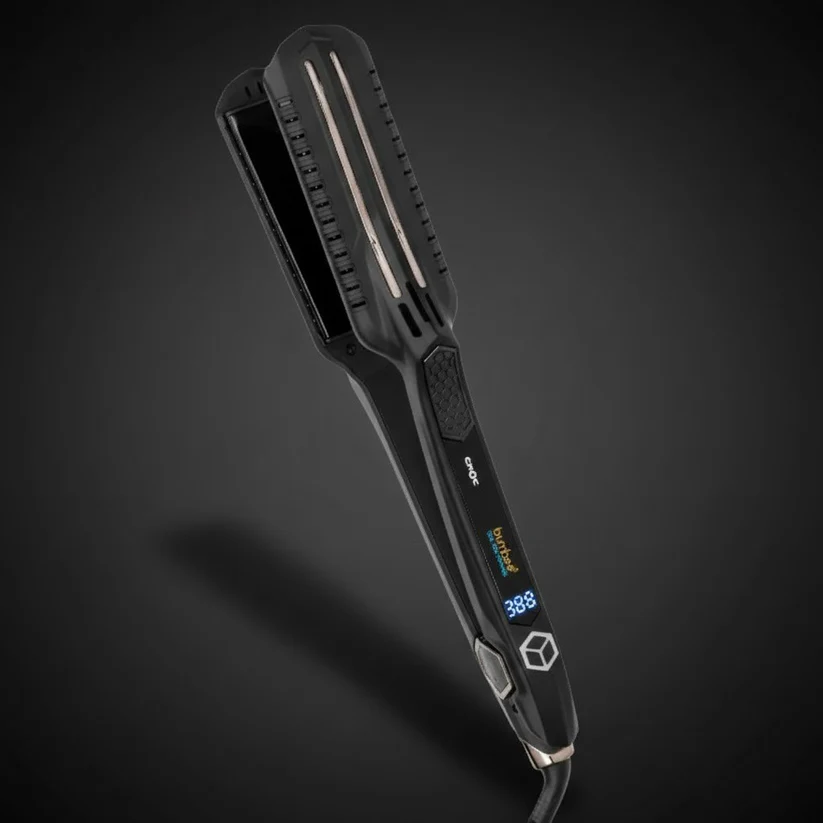
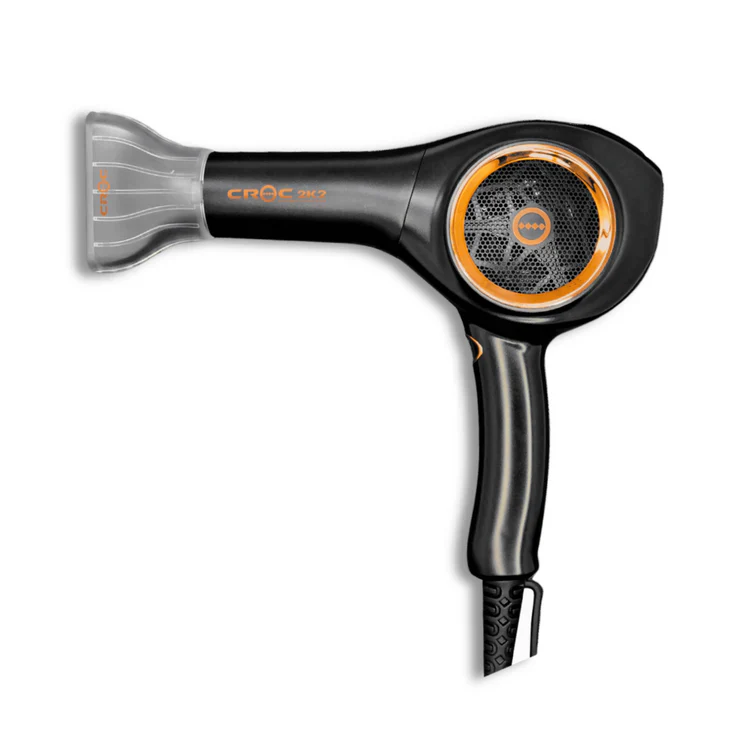
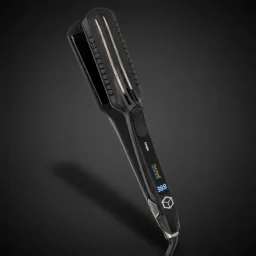
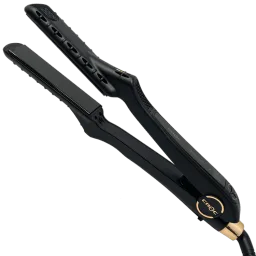
The CROC irons I'd point thick hair at
I'm going to be direct about which of our own tools fit, because that's what you're here for. Four, in order of how thick and long your hair is.
How to straighten thick hair with fewer passes
- Dry it completely. Damp hair steams and won't hold. (The exception is our Wet-to-Dry iron, which is built for it — but that's a different post.)
- Section big, but not bigger than the plate. With a 1.75" iron, a section about 2" wide and as deep as a pencil.
- Heat protectant, combed through. Thin and even. Not a puddle.
- Set 380–400°F. Go up only if a clean pass doesn't hold.
- Clamp near the root, glide at a steady speed, don't stop. Parking the iron is how you get a dent.
- One pass. If it needs a second, take a smaller section next time — don't repeat on the same one.
- Let it cool before you touch it. The set happens as it cools.
Frequently asked questions
Henry Rodriguez has designed and sold professional hair tools since 2010. CROC irons are tested before they ship and covered by a 5-year limited warranty. Register yours →
Is a 1-inch flat iron okay for thick hair?
It works, but you'll take small sections and many passes, which is more total heat exposure. If your hair is thick and past shoulder length, 1.5" or 1.75" will be faster and easier on the hair. Keep the 1" for bangs and detail work.
What temperature is safe for thick hair on a flat iron?
Start at 380°F and move up only if a clean, single pass doesn't hold. Most thick, healthy hair finishes between 380 and 410°F on an iron that holds its temperature. 450°F is for very coarse, resistant hair — not a default.
Titanium or ceramic for thick hair?
Titanium. It transfers heat into a dense section faster, which means fewer passes. Ceramic is the better choice for fine or fragile hair.
Why do the plates on my flat iron move?
They're floating plates. They tilt to follow the section so the whole plate makes even contact — especially useful on thick hair. It's a feature, not a fault.
Do wide-plate flat irons work on short thick hair?
A 1.75" plate is hard to maneuver on short hair. For thick hair above the shoulders, 1.5" gives you most of the speed with far more control.