Why Professional Hair Dryers Use Infrared (and What a Brushless Motor Has to Do With It)
a conventional dryer heats the air and the air dries the surface of your hair, so you keep the heat on until the inside catches up. An infrared dryer warms the hair itself, inside and out at the same time, so it dries faster at a lower air temperature. Pair that with a brushless motor that moves more air for longer, and you get the two things a professional dryer is judged on: speed, and hair that isn't cooked getting there.
Hair Tool Specialist, 15 Years
9 min read
Most people buy a dryer on wattage. It's the biggest number on the box, and it's almost meaningless. I've had 1,875W dryers that took twenty minutes on a thick head and 1,500W dryers that did it in eight. The difference wasn't the watts. Here's what it was.
What does "infrared" mean on a hair dryer?
A standard dryer has a coil. Electricity heats the coil, a fan blows air across it, hot air hits your hair. The hot air dries what it touches — the outside of the section — and the water deeper in the section has to wait for the heat to work its way in. That's why a thick section feels dry on top and damp underneath, and why you keep going over it.
An infrared dryer replaces or supplements the coil with an element that emits far-infrared — a wavelength of heat that warms the hair strand directly rather than just the air around it. The water inside the section starts evaporating at the same time as the water on the surface. Two things follow:
- It's faster, because you're drying the whole section at once instead of layer by layer.
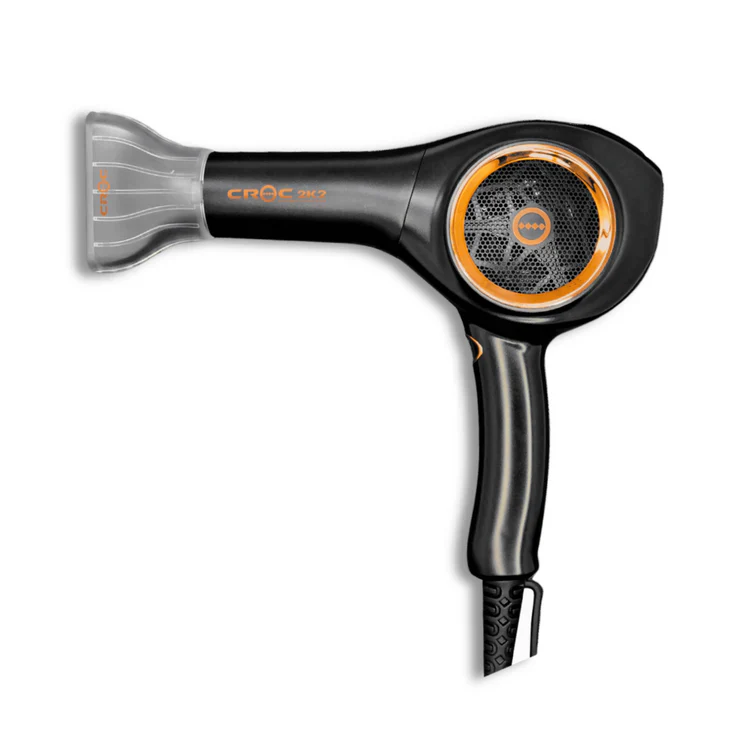
- The air can be cooler for the same result, because the heat is doing its work inside the strand instead of blasting the surface until the inside catches up. On the Masters 2K2 the air runs no hotter than 192°F — a conventional dryer on high is often well over 250°F.
That second point is the one that matters for the hair. Surface heat is what roughens the cuticle and reads as frizz and dullness. Infrared gets you dry with less of it. What infrared actually does →
Why do professional dryers use brushless (BLDC) motors?
Because a salon dryer runs for hours a day, and the motor is what wears out.
A conventional dryer motor uses carbon brushes that physically contact the spinning part. They wear down, they get hot, they're the reason a cheap dryer smells like burning after a year and dies after two. A brushless DC motor has no brushes — it's driven electronically — so it runs cooler, lasts several times longer, spins faster, and weighs less.
For you, that translates to three things you can feel:
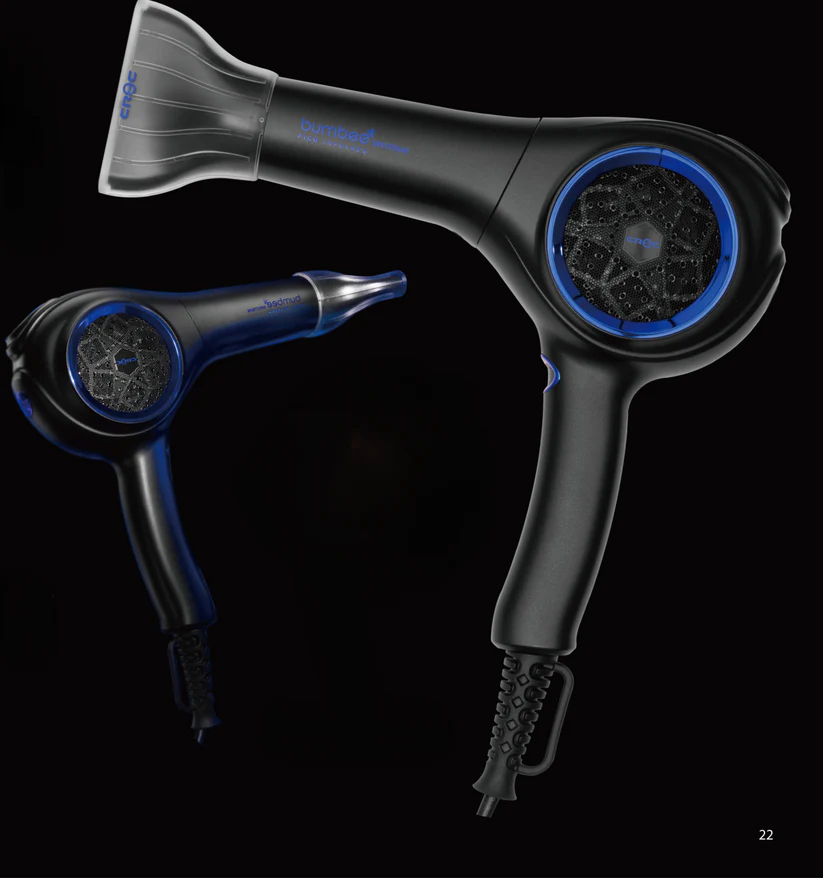
- More airflow. Our Bumbee Spectrum pushes 80 mph of air from a 1,500W motor. Airflow, not heat, is what moves water off hair. That's the number that predicts drying time.
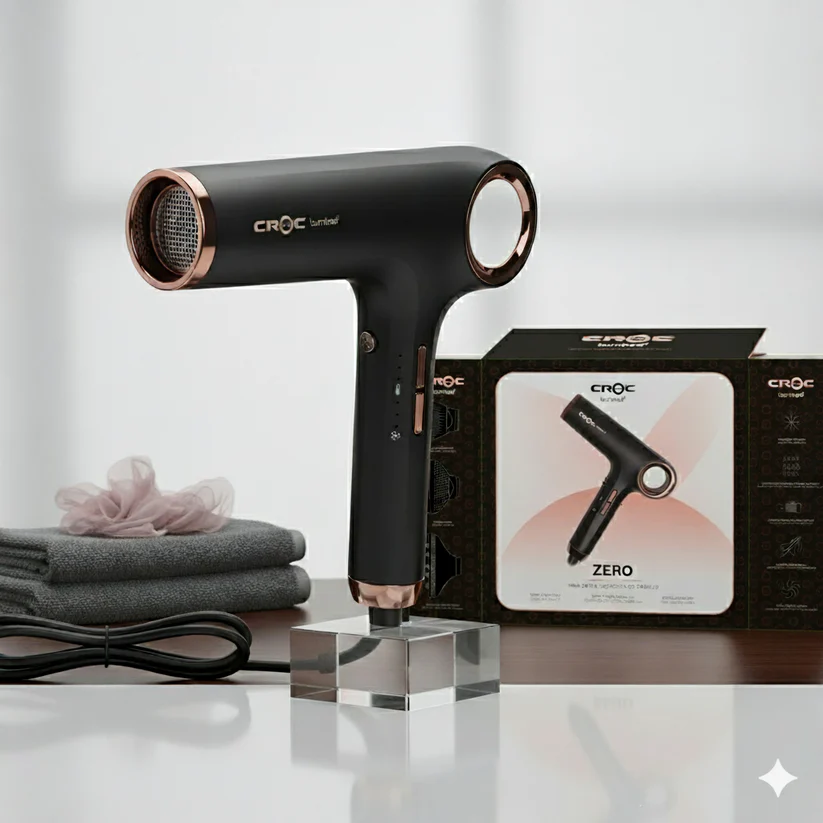
- Less weight and noise. The Masters 2K2 runs at 59 dB — a normal conversation — because there are no brushes rattling.
- A dryer that's still working in year five, which is why we warrant them that long.
If a dryer's spec sheet doesn't say brushless or BLDC, it isn't.
Do ionic hair dryers work?
Yes, within limits. An ionic generator releases negative ions into the airflow. They break up water droplets on the hair so they evaporate faster, and they flatten the cuticle a little, which is the smoother, shinier finish people notice. It's real, it's modest, and it's more noticeable on frizz-prone and thick hair than on fine hair — where too much ion can actually flatten volume you wanted to keep. Our Zero Dryer has an ionic generator; if you have fine hair and want lift, use it on a lower setting or skip the ion mode.
What actually makes a hair dryer "professional"?
Not the word on the box. Judge it on these:
| What to look at | Why | Professional range |
|---|---|---|
| Motor type | Longevity, airflow, weight | Brushless (BLDC) |
| Airflow | The number that predicts dry time | 70+ mph |
| Heat source | Speed vs surface damage | Infrared |
| Temperature control | Fine hair vs thick hair need different air | Multiple settings + cool shot |
| Cord | You move around a head | 8–12 ft |
| Wattage | Tells you power draw, not performance | Whatever gets the above |
Wattage is last on purpose. A 1,500W brushless infrared dryer will beat a 2,000W coil dryer with a brushed motor every time.
"But this other dryer is 2,500 watts" — the conversation I have every week
I hear this constantly, so let me put it in writing. Someone shows me a dryer advertised at 2,000, 2,500, sometimes 3,000 watts, and asks why ours are 1,500 to 1,875.
Start with the outlet. In the US, a household outlet runs at 110–120 volts on a 15-amp circuit. That's the whole supply. The most a hair dryer can pull from it is about 1,875 watts — which is exactly why 1,875W is the number on almost every full-size dryer sold here. It isn't a design choice; it's the ceiling. A dryer labeled 2,500W or 3,000W either carries a rating from a 220–240V market where the outlets are different, or it's a number on a box. Plugged into a US wall, it cannot draw it. The wall won't give it.
Then think about light bulbs. Twenty years ago a bright bulb was 100 watts. Today an LED that's brighter and lasts ten times longer draws 8 or 9. Nobody buys bulbs by wattage anymore, because wattage stopped meaning brightness the moment the technology changed. Dryers went through the same shift and the marketing didn't catch up. A brushless motor and an infrared element move more air and dry faster on 1,500 watts than a coil-and-brushes dryer does on 1,875. Chasing watts on a dryer is buying the 100-watt bulb.
We build ours to 1,500 watts on purpose, and lower where we can, because efficiency is the spec that matters and because our tools go into salons. Which brings up the part nobody selling a "3,000-watt" dryer mentions:
In a salon, wattage is a cost. Put two 1,875W dryers on the same circuit and you're at the breaker. Put five stations of them on a Saturday and you're resetting breakers all day or paying an electrician to rewire. Every watt also shows up on the electric bill, eight hours a day, six days a week. A 1,500W dryer that dries faster than an 1,875W one isn't a compromise for a stylist — it's the tool that lets you run more chairs on the wiring you already have and pay less to do it.
That's why the wattage row is at the bottom of the table above. It tells you what the dryer costs to run. It doesn't tell you how fast it dries.
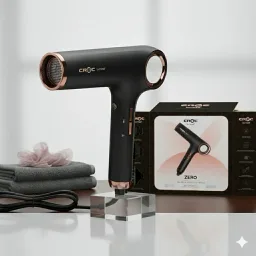
The CROC dryers
How to dry hair faster without more heat
- Towel-blot, don't rub. Get the surface water off before the dryer touches it — a microfiber towel for two minutes saves five with the dryer.
- Rough-dry to 70% on medium heat, high airflow, moving constantly, before you pick up a brush. Airflow does this part, not heat.
- Then section and use the nozzle. Point it down the hair shaft, root to end, with the brush. That's what closes the cuticle and gives the smooth finish — not more heat.
- Medium heat is the default. High is for thick, coarse hair and for the roots. Fine hair barely needs it.
- Cool shot to finish each section. It sets the shape and locks in the shine.
- Keep the filter clean. A clogged intake chokes the airflow and pushes the temperature up — the exact opposite of what you want. Once a month, wipe it.
Frequently asked questions
Henry Rodriguez has designed and sold professional hair tools since 2010. CROC tools are tested before they ship and covered by a 5-year limited warranty. Register yours →
Is an infrared hair dryer better?
For most hair, yes. It dries the strand from the inside and the outside at once, so it's faster and the air can run cooler — less surface heat, less frizz and dullness. The difference is most noticeable on thick and coarse hair.
What does BLDC or brushless mean on a hair dryer?
A motor with no carbon brushes, driven electronically. It runs cooler, spins faster, weighs less, and lasts several times longer than a brushed motor. It's the single biggest difference between a professional dryer and a consumer one.
Does wattage matter on a hair dryer?
Less than you think. Wattage is power draw, not performance. Airflow (mph) and heat type predict drying time; wattage doesn't. A 1,500W brushless infrared dryer outperforms most coil dryers at 1,875W — and a US outlet can't deliver more than about 1,875W anyway, whatever the box says.
Can a hair dryer really be 2,500 or 3,000 watts?
Not on a US outlet. A 120V, 15-amp household circuit tops out around 1,875W, which is why that's the standard maximum rating here. Higher numbers are ratings from 220–240V markets, or marketing.
Are ionic hair dryers worth it?
For frizz-prone, thick or coarse hair, yes — smoother, shinier finish and slightly faster drying. For fine hair, use the ion mode sparingly; it can flatten volume.
How hot should a hair dryer get?
Cooler than most run. A well-designed infrared dryer does its work with air under 200°F. If your dryer is uncomfortably hot on your hand, it's too hot for your hair.