Flat Irons for Short or Fine Hair: Go Narrower, Go Cooler
fine hair needs a narrow plate — 1 inch, 1.25 at most — a temperature between 280 and 340°F, and a fast, light pass. Fine strands reach temperature almost instantly, so the damage you're avoiding isn't from a hot iron; it's from a wide, hot iron parked on hair that was already done.
Hair Tool Specialist, 15 Years
7 min read
Fine hair gets the opposite advice from thick hair on almost every point, and most people with fine hair are using an iron built for someone else. Here's what changes, and why.
Why does fine hair need a different flat iron?
Two reasons, and they pull in the same direction.
Fine hair heats through fast. A fine strand has less mass, so it reaches plate temperature in a fraction of the time a coarse strand does. The same 400°F pass that a thick section needs will overcook a fine one. You see it as hair that looks flat, dull, and — over time — thinner at the ends. That's not breakage from one bad day. It's a little too much heat, every day.
Fine hair shows everything. Thick hair hides a dented section or a slightly uneven pass in the volume around it. Fine hair doesn't have the volume to hide in. Every crease from a parked iron, every over-straightened flat spot, is visible.
So the tool needs to give you control — a narrow plate you can place exactly, and a temperature range that goes low enough to matter.
What plate width is best for fine or short hair?
1 inch. 1.25 if your hair is fine but long and you want to save a little time.
The reasons stack up:
- Section size. Fine hair straightens in small sections — you don't need a wide plate to hold the section, and a wide plate tempts you into sections too thick to heat evenly.
- Control. On short hair — a bob, a pixie, a crop — a 1.5" plate can't get close to the root without touching the scalp, and can't follow the shape around the ears and nape. A 1" plate can.
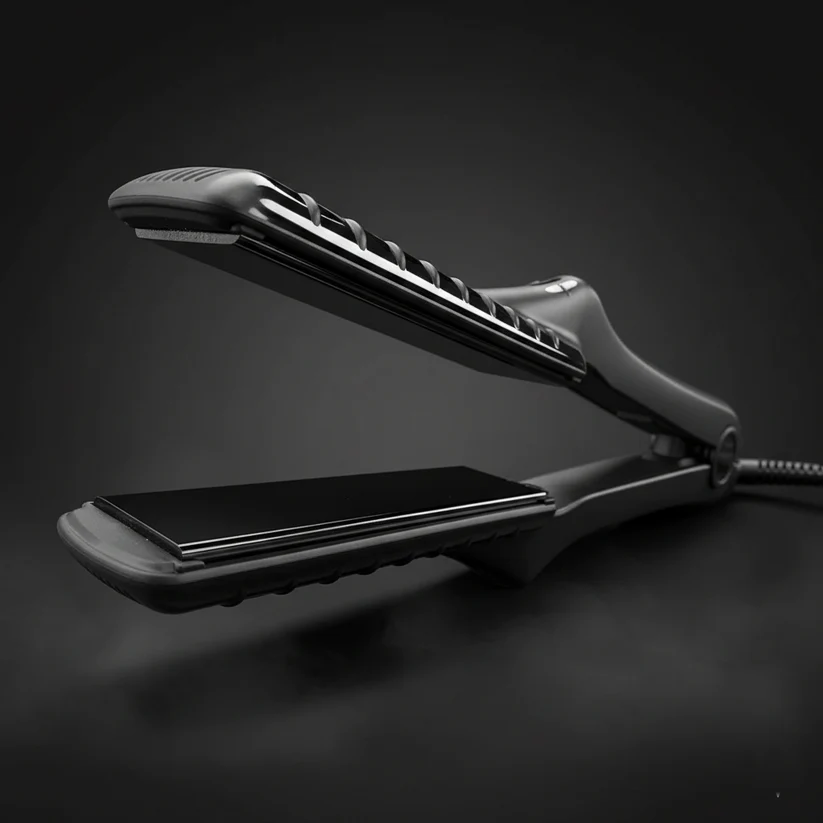
- Curling. A 1" iron is the one you can turn your wrist on and get a bend, a wave, or a full curl. This is the reason so many stylists carry a 1" as their everyday iron: it straightens and it curls. Wide plates only straighten.
- Volume. A narrow plate lets you lift at the root and set direction. A wide one flattens. Fine hair usually wants the opposite of flat.
If your hair is fine and past your shoulders, 1.25" is a fair compromise. If it's fine and thick — a lot of fine strands — read the thick-hair guide for the width, then bring the temperature from this one. Best flat iron for thick hair →
What temperature should fine hair be straightened at?
280–340°F. That's the whole range for most fine hair. Color-treated or damaged fine hair sits at the bottom of it.
| Fine hair that is… | Start here | Ceiling |
|---|---|---|
| Healthy, natural | 320°F | 350°F |
| Color-treated or highlighted | 290°F | 320°F |
| Damaged, breaking, or very thin | 280°F | 300°F |
| Fine but dense or wavy | 330°F | 370°F |
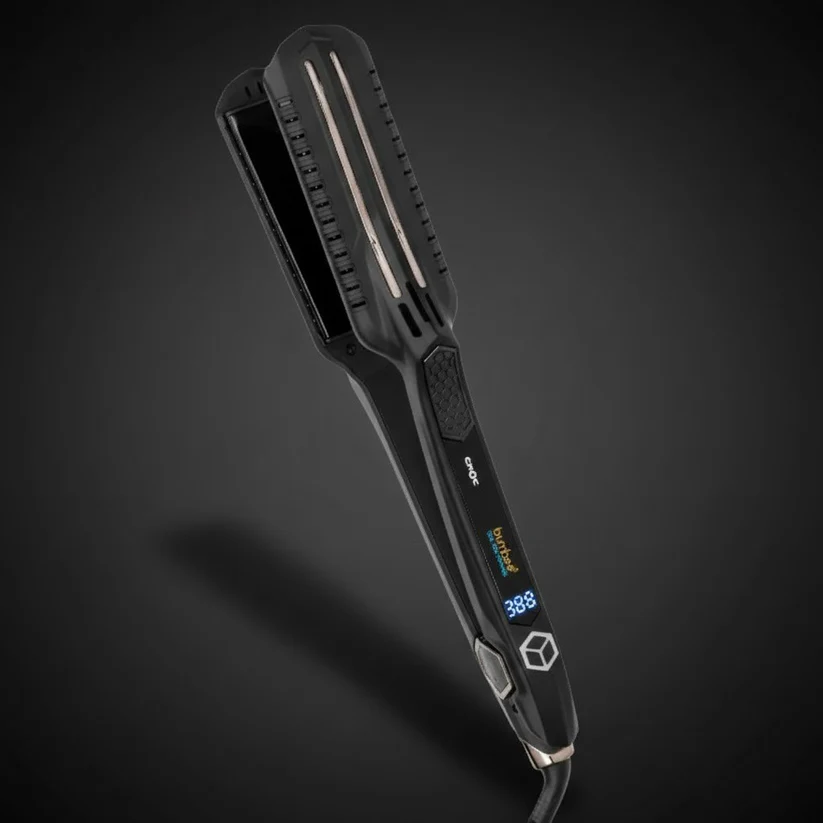
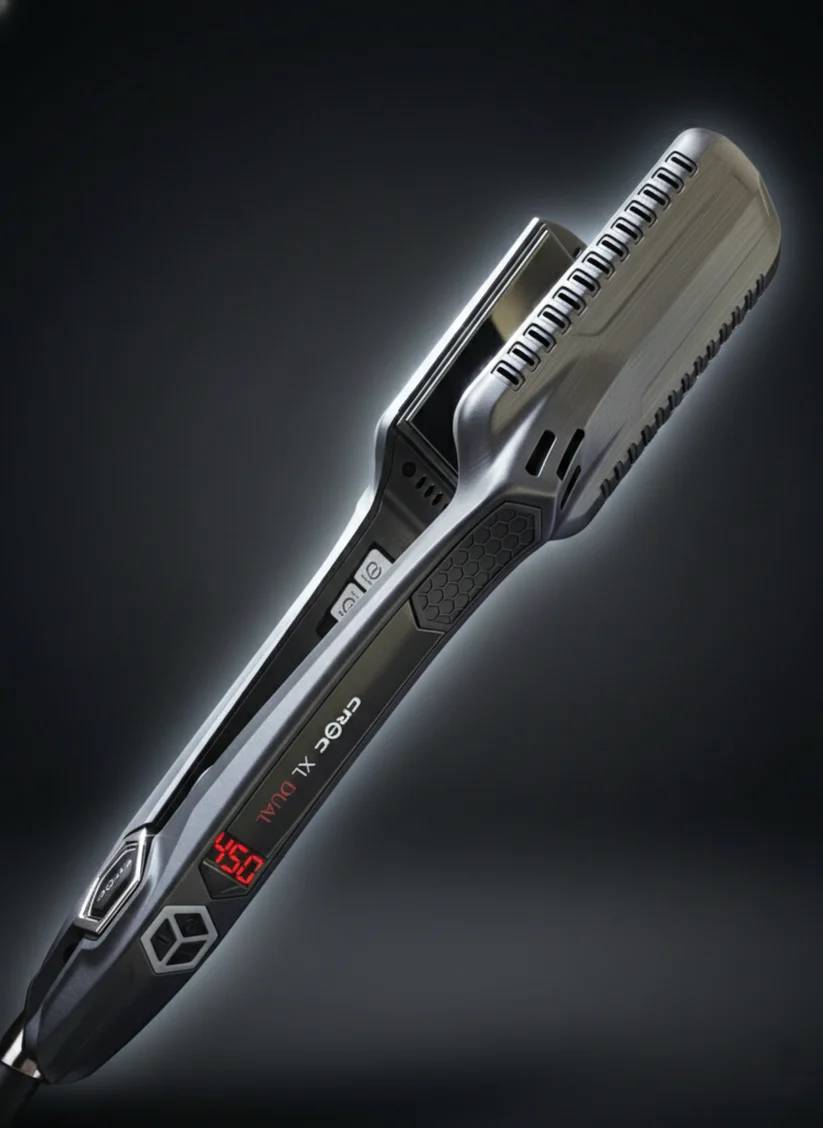
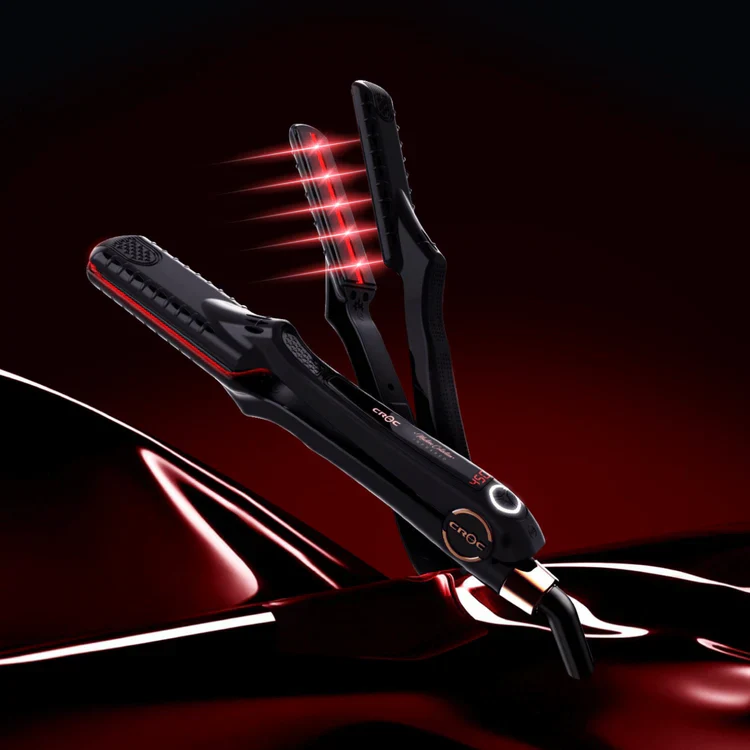
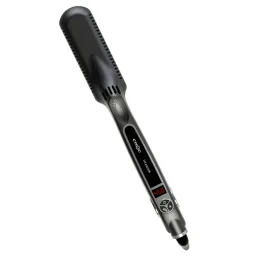
This is why the bottom of the temperature range matters as much as the top when you're buying. An iron that starts at 350°F has no setting for fine hair. Check the bottom of the range before you buy. Some of our irons start at 270°F; the LED 1" and Rose Gold 1.25" start at 330°F, which suits healthy fine hair but not the most fragile.
One more thing: on fine hair the pass should be quick. Not rushed — steady — but you don't need to slow down to "let the heat work." It already has.
Titanium or ceramic for fine hair?
Either works — what matters is temperature control. This is the one hair type where I'll say the material argument is smaller than people make it.
Titanium heats fast and transfers fast, which is efficient and means a quicker pass. On fine hair that speed cuts both ways: it's forgiving if you keep moving and unforgiving if you park. Ceramic and tourmaline-ceramic plates are a touch softer in how they hand heat over, which some people with very fragile hair prefer.
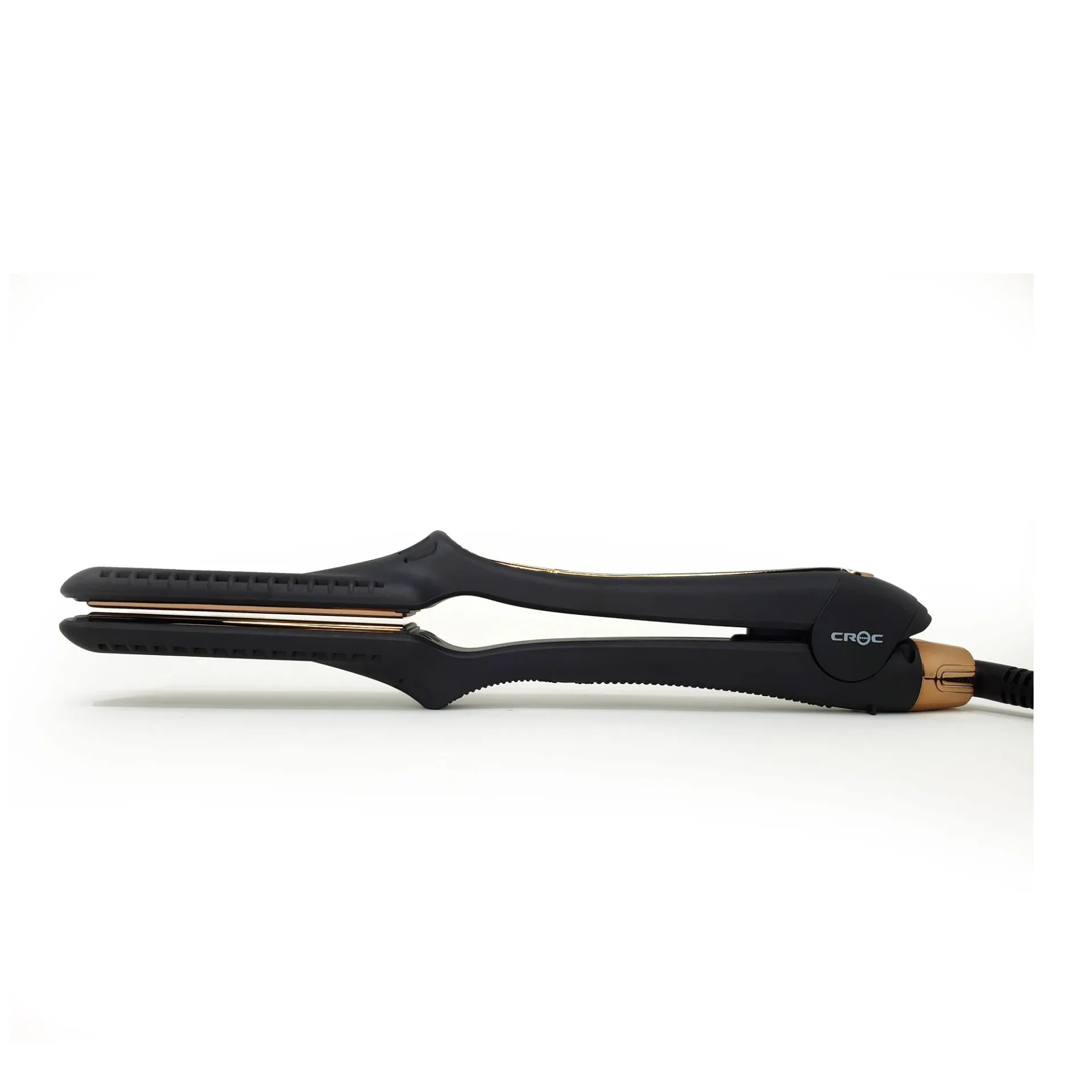
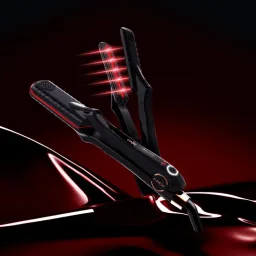
Our black titanium plates with a far-infrared ceramic heater — the LED Black Titanium, for instance — give you the fast, even titanium surface with a gentler heat source behind it. For fine hair that's a good middle.
The CROC irons I'd point fine or short hair at
How to straighten fine hair without flattening it
- Dry completely, with a little lift at the root. Blow-dry against the direction it falls, or upside down for a minute.
- Light heat protectant, combed through. Fine hair goes limp under heavy product — a mist, not a cream.
- Set 300–330°F. Lower if it's colored.
- Section an inch wide. Thin enough to see through.
- Clamp a half-inch from the root and angle the iron slightly up as you start the pass. That sets lift instead of flattening it.
- One quick, steady pass. Don't slow down for the ends — they're the finest part and they're done first.
- For bend or wave, turn your wrist a half turn as you glide through the last third of the section.
- Cool, then a fingertip of light serum on the very ends if they need it. Nothing on the roots.
Frequently asked questions
Henry Rodriguez has designed and sold professional hair tools since 2010. CROC irons are tested before they ship and covered by a 5-year limited warranty. Register yours →
What size flat iron is best for short hair?
1 inch. It gets close to the root, follows the shape around the ears and nape, and doubles as a curling tool. A 1.5" plate is too wide to control on hair above the shoulders.
What temperature should I straighten fine hair at?
280–340°F. Healthy fine hair around 320°F; color-treated around 290°F; damaged or very thin hair at 280°F. Fine hair reaches temperature almost instantly, so it never needs the 400°F range.
Can you curl hair with a flat iron?
Yes, and a 1-inch iron is the best tool for it. Clamp, turn your wrist a half turn, and glide. That's how most stylists put a bend in short and fine hair.
Does flat ironing thin out fine hair?
Heat itself doesn't remove hair, but daily heat that's too high for fine strands weakens the ends until they break — which reads as thinning. Keep the temperature under 340°F and take one pass, and fine hair holds up well.
Titanium or ceramic for fine hair?
Either, as long as it goes down to 280°F. Temperature control matters more than plate material for fine hair. If your hair is very fragile, a ceramic or tri-plate surface is a touch gentler.